Located At
Open Today Sales: 9 AM-7 PM


Families shopping for a midsize three-row SUV have no shortage of strong options, and three of the segment’s biggest names go head to head this year: the 2026 Honda Pilot, the 2026 Toyota Highlander, and the 2026 Hyundai Santa Fe. All three promise room for the whole family, modern technology, and enough capability for weekend errands and road trips alike. But once the specs are lined up side by side, one of these three-row SUVs pulls ahead of the pack. Let’s break down how the Pilot, Highlander, and Santa Fe compare on performance, comfort, technology, and safety.
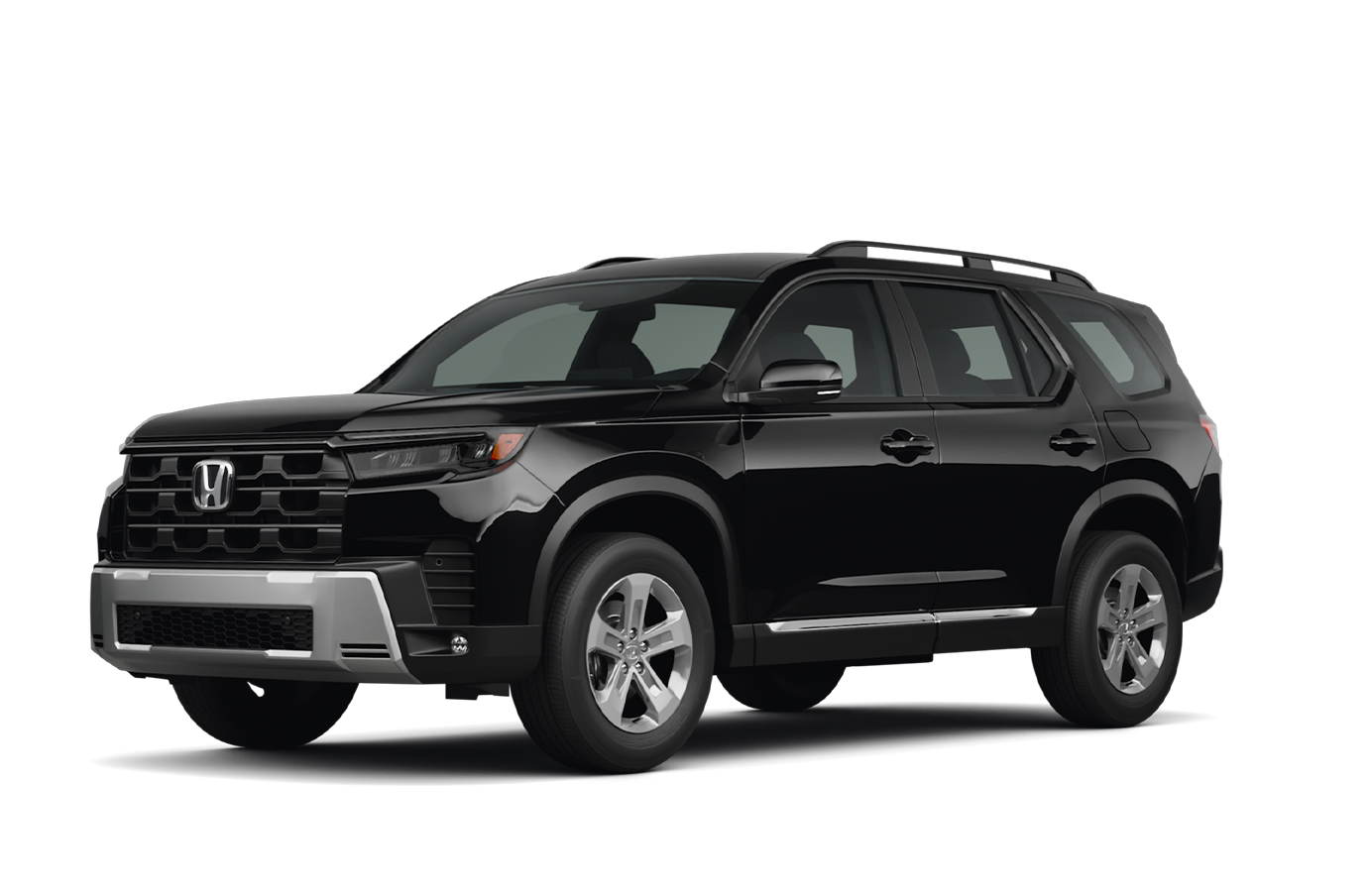
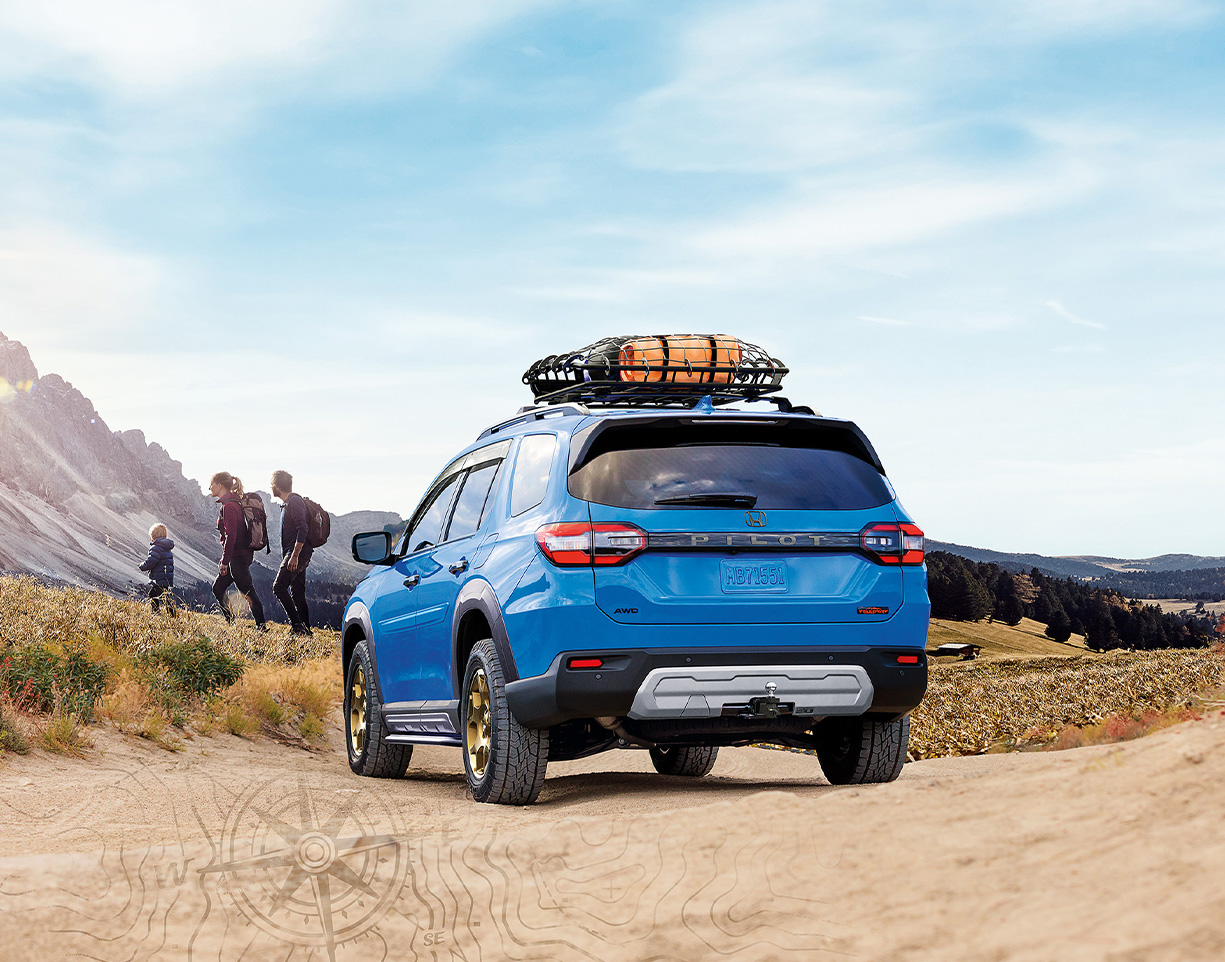
Every 2026 Honda Pilot is powered by a 3.5-liter V6 producing 285 horsepower and 262 lb-ft of torque, paired with a smooth-shifting 10-speed automatic. That output tops both rivals here: the Highlander’s turbocharged 2.4-liter four-cylinder makes 265 horsepower, while the Santa Fe’s turbocharged 2.5-liter four-cylinder produces 277 horsepower. The Highlander and Santa Fe do generate more torque off the line, at 310 lb-ft and 311 lb-ft respectively, and both also offer a hybrid powertrain for buyers who prioritize efficiency, with the Highlander Hybrid rated up to 35 mpg combined and the Santa Fe Hybrid rated up to 36 mpg combined. The Pilot sticks with its proven V6 across every trim, favoring consistent, effortless power delivery for daily driving and highway merging.
When it comes to towing, the Pilot holds its own against the class leader. Equipped with available all-wheel drive, the Pilot tows up to 5,000 pounds, matching the Highlander’s turbo-powered towing capacity. The Santa Fe tops out at 3,500 pounds on most trims, climbing to 4,500 pounds only on the off-road-focused XRT trim. Every Pilot also comes with a dedicated Tow Mode and standard Trailer Stability Assist to help keep a loaded trailer settled on the road.
Cargo capacity is where the Pilot truly separates itself from this pair. With the rear rows folded, the Pilot opens up to as much as 113.7 cubic feet of cargo space, enough for camping gear, sports equipment, or a serious warehouse-store run. The Highlander offers up to 84.3 cubic feet with its second and third rows folded down, and the Santa Fe offers up to 79.6 cubic feet behind the front seats, both a significant step down from the Pilot’s total capacity.
The Santa Fe does offer more front-seat legroom, at 44.4 inches versus the Pilot’s 41.0 inches, and its cabin feels airy thanks to a curved panoramic display and upscale materials on higher trims. The Highlander counters with a refined interior and an available panoramic glass roof. But for families who need to haul as much as they carry, the Pilot’s cargo advantage is hard to ignore. Honda also gives Pilot shoppers configuration flexibility the other two can’t match: depending on trim, the second row can be set up as a bench seat for eight passengers, available Captain’s Chairs, or a removable middle seat that stows neatly under the cargo floor.
Every 2026 Pilot, from the base Sport trim to the range-topping Black Edition, comes standard with a 12.3-inch touchscreen, a 10.2-inch digital instrument cluster, and Google built-in with a three-year unlimited data trial. That’s a real advantage over the competition: the Highlander’s standard touchscreen is just 8.0 inches, with the larger 12.3-inch display reserved for higher trims, and the Santa Fe’s base SE and SEL trims get a smaller 12.3-inch display audio system without built-in navigation, saving the full navigation-equipped touchscreen for the XRT trim and above. Wireless Apple CarPlay® and Android Auto™ come standard across all three lineups, and the Pilot’s available Bose premium sound system with 12 speakers gives audiophiles a genuine step up on higher trims.
Safety is comprehensive across the board. The Pilot’s Honda Sensing suite, which includes Collision Mitigation Braking, Road Departure Mitigation, Lane Keeping Assist, Adaptive Cruise Control with Low-Speed Follow, Traffic Jam Assist, a Blind Spot Information System, and a Cross Traffic Monitor, comes standard on every single trim with no exceptions. The Highlander’s Toyota Safety Sense 2.5+ suite and the Santa Fe’s Hyundai SmartSense suite are both well-equipped with forward collision and lane-keeping technology, but some features are trim-dependent, such as the Santa Fe’s Highway Driving Assist, which is limited to the XRT trim and above. With the Pilot, every buyer gets the same complete safety package regardless of trim level.
After putting the 2026 Honda Pilot, 2026 Toyota Highlander, and 2026 Hyundai Santa Fe side by side, the Pilot comes out on top. It offers the strongest standard engine of the three, a tow rating that matches the class leader, dramatically more cargo space than either rival, and a level of standard technology and safety equipment that doesn’t disappear once you step down from the top trim.
For families who want power, space, and consistency across every trim level, the 2026 Honda Pilot is the smarter choice. Visit Delaney Honda in Indiana, PA to see the 2026 Pilot in person and schedule your test drive today.