Located At
Open Today Sales: 9 AM-7 PM


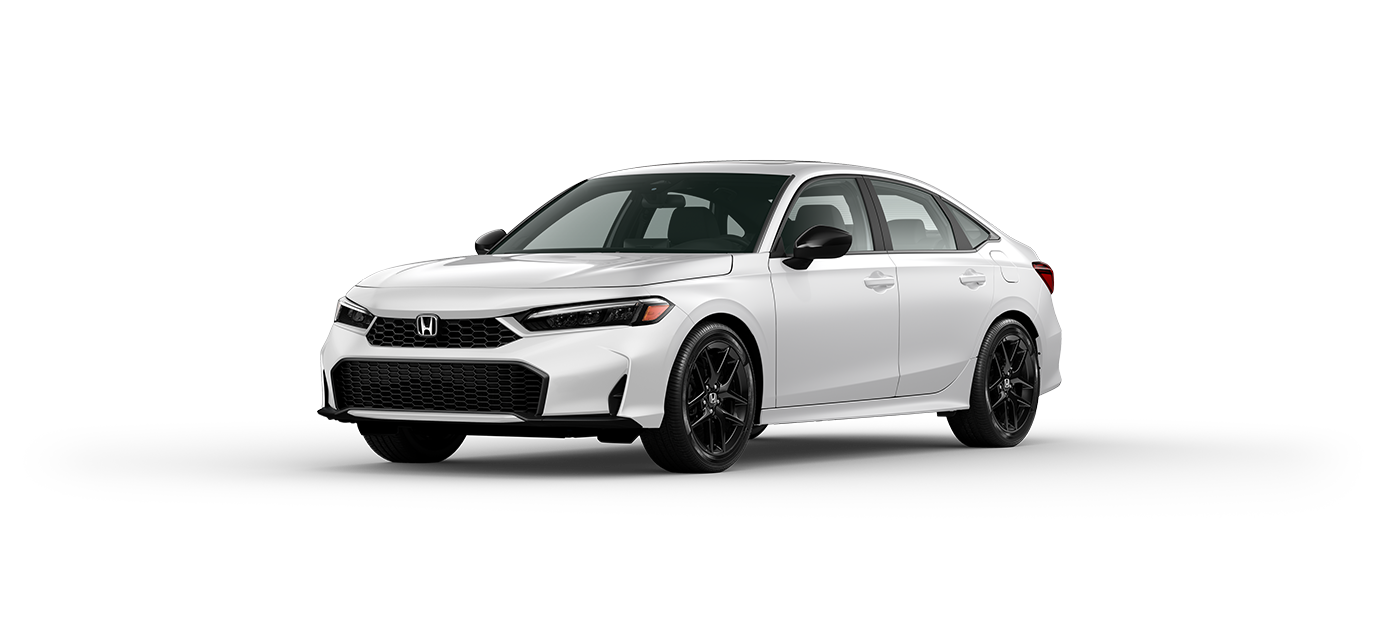
The compact sedan segment has never been more competitive, and four nameplates sit at the center of it. The 2026 Honda Civic Sedan, the 2026 Toyota Corolla, the 2026 Mazda3 and the 2026 Hyundai Elantra each approach the same assignment differently. One leans on hybrid efficiency, one on driving character and interior craftsmanship, one on interior room and warranty coverage, and one on delivering a genuinely strong version of all of it at once.
Shoppers cross-shopping these four are usually weighing the same short list of questions. Which one is quick enough to be enjoyable? Which one saves the most fuel without feeling slow? Which one has usable back seat and trunk space? Which one comes standard with the driver assistance features that matter? Here is how these four compact sedans compare, and why the 2026 Honda Civic is the one to drive first at Delaney Honda in Indiana, PA.
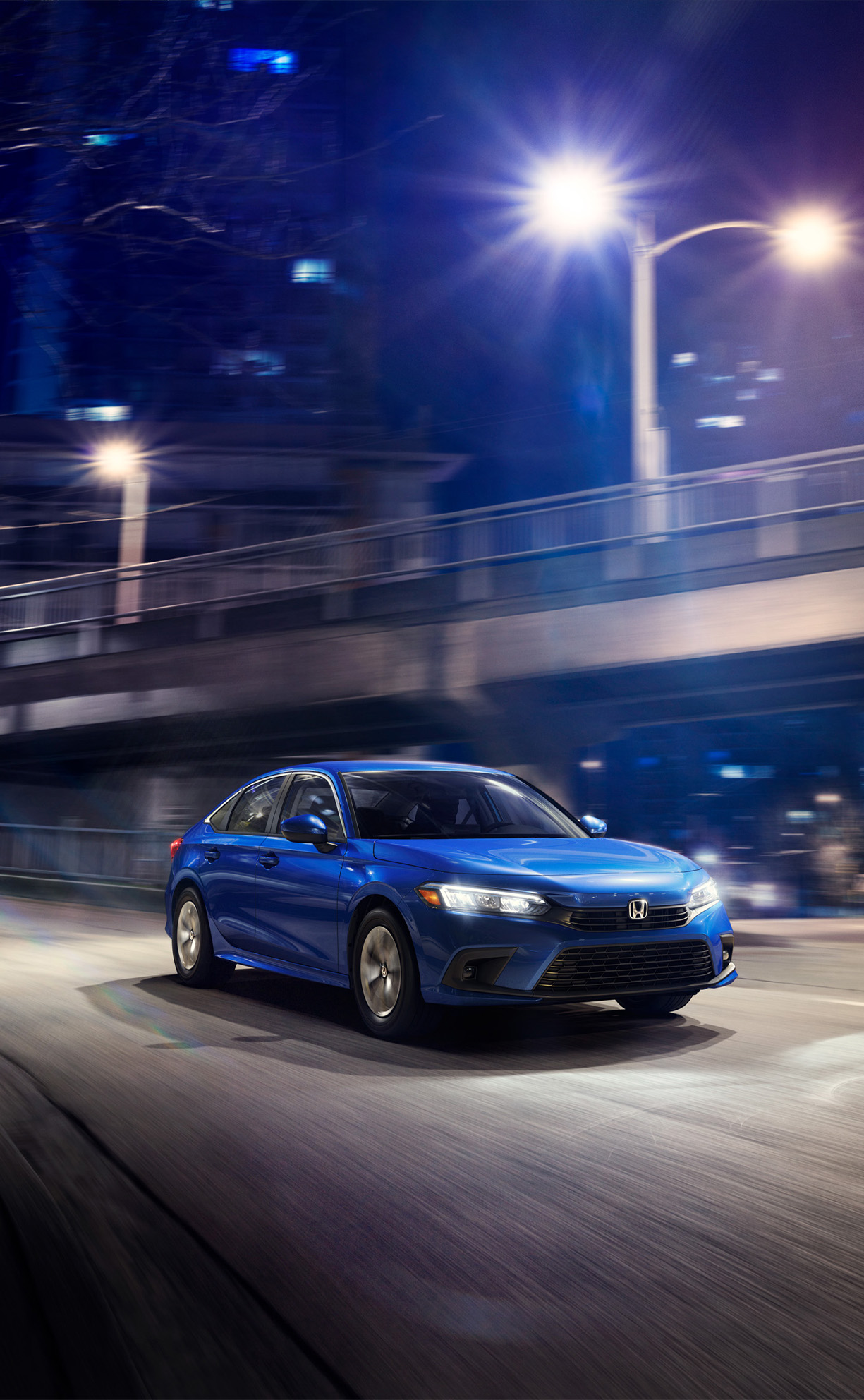
The 2026 Civic Sedan gives buyers two very different ways to go. LX and Sport trims use a 2.0-liter four-cylinder engine rated at 150 horsepower and 133 lb-ft of torque, paired with a continuously variable transmission and front-wheel drive. The LX returns an EPA-estimated 32 mpg city and 41 mpg highway, and the Sport is rated at 31 mpg city and 39 mpg highway.
The more compelling story is the Civic Sport Hybrid and Sport Touring Hybrid. Their two-motor hybrid system pairs a 2.0-liter Atkinson-cycle engine with an electric propulsion motor for 200 total system horsepower and 232 lb-ft of torque, while returning an EPA-estimated 50 mpg city and 47 mpg highway for 49 mpg combined. That combination is the headline of this comparison, because no other hybrid here is remotely close on power.
Every gas 2026 Corolla sedan uses a 2.0-liter four-cylinder producing 169 horsepower and 151 lb-ft of torque through a CVT, with front-wheel drive across LE, SE and XSE. The Corolla Hybrid pairs a 1.8-liter engine with Toyota’s hybrid system for 138 net combined horsepower and 105 lb-ft of torque, and it earns an EPA-estimated 53 mpg city and 46 mpg highway on the LE for up to 50 mpg combined. It also offers something the Civic does not: electronic on-demand all-wheel drive, available on the hybrid LE and SE grades. What it gives up is muscle, because 138 net horsepower is 62 fewer than the Civic hybrid delivers.
The 2026 Mazda3 takes the opposite approach. Its standard 2.5-liter engine makes 186 horsepower and 186 lb-ft of torque, and the available 2.5 Turbo produces 227 horsepower on regular fuel and rises to 250 horsepower and 320 lb-ft on recommended premium. Both use a six-speed automatic, and i-Activ all-wheel drive comes standard on the 2.5 S Carbon Edition and 2.5 Turbo Premium Plus. The tradeoff is at the pump, where the turbo sedan is EPA-estimated at 23 mpg city and 32 mpg highway for 27 mpg combined, and there is no hybrid option anywhere in the lineup.
The 2026 Elantra starts with a 2.0-liter four-cylinder rated at 147 horsepower and 132 lb-ft of torque with an intelligent variable transmission, and the N Line steps up to a 201-horsepower 1.6-liter turbo with a seven-speed dual-clutch. The Elantra Hybrid is rated at 139 combined horsepower and 195 lb-ft of combined torque, and the Hybrid Blue is the efficiency champion of this group at an EPA-estimated 51 mpg city and 58 mpg highway for 54 mpg combined. All-wheel drive is not offered on any Elantra.
Put plainly, the Corolla Hybrid and Elantra Hybrid Blue post slightly higher combined mpg figures, and the Mazda3 Turbo makes more peak power. Neither camp does both. The Civic hybrid is the only car in this comparison that delivers 200 horsepower and 49 mpg combined in the same package, on regular fuel, which is why it wins the performance argument on balance.
The Civic Sedan measures 184.8 inches long on a 107.7-inch wheelbase and seats five. Front legroom is 42.3 inches and rear legroom is 37.4 inches on all four trims, and the trunk holds 14.8 cubic feet whether you choose the gas car or the hybrid. That last point matters more than it sounds, because the hybrid battery costs the Civic nothing in cargo room. It is the largest trunk in this four-car group. Both hybrid trims add heated front seats, dual-zone automatic climate control and a power moonroof as standard equipment, and the Sport Touring Hybrid adds leather-trimmed seating with an eight-way power driver’s seat.
The Corolla is the tightest of the four in back. It offers 42.0 inches of front legroom and 34.8 inches of rear legroom, with a 13.1-cubic-foot trunk that is the same on the gas car and the hybrid. The Mazda3 is similar, at 42.3 inches of front legroom, 34.4 inches of rear legroom and a 13.2-cubic-foot trunk, though it counters with the most upscale cabin materials and finish in the segment. Its interior genuinely reads a class above, and that is a legitimate reason people buy it.
The Elantra is the roomiest here for rear passengers, with 38.0 inches of rear legroom and 42.3 inches up front, plus a 14.2-cubic-foot trunk that is unchanged on the hybrid. It gives up six-tenths of a cubic foot of trunk volume to the Civic and, on trims with the sunroof, front headroom drops from 40.6 to 38.7 inches.
The Elantra wins rear legroom by six-tenths of an inch. The Civic wins nearly everything else, with the largest trunk of the four, 2.6 more inches of rear legroom than the Corolla and 3.0 more than the Mazda3, and no cargo penalty for choosing the hybrid.
Civic LX, Sport and Sport Hybrid trims come with a 7-inch touchscreen and a 7-inch TFT driver display, and the Sport Touring Hybrid steps up to a 9-inch touchscreen, a 10.2-inch fully digital instrument cluster, wireless Apple CarPlay® and wireless Android Auto™, a 12-speaker Bose premium sound system with subwoofer, Google built-in, Alexa Built-in, a wireless phone charger and Wi-Fi hotspot capability. Sport and Sport Hybrid trims run a 180-watt eight-speaker system, and every trim includes Bluetooth and USB-C connectivity.
Every 2026 Corolla gets an 8-inch touchscreen with a 10.5-inch display available on SE and standard on XSE, and wireless Apple CarPlay® and Android Auto™ are standard on all grades, which is a real advantage over the Civic’s lower trims. New for 2026, a 7-inch digital gauge cluster is standard on LE and SE, and a 12.3-inch cluster is standard on XSE and available on SE. A nine-speaker JBL system with subwoofer and 800-watt amplifier is available on the XSE.
The Mazda3 uses an 8.8-inch center display on most trims, with a 10.25-inch display and a 12-speaker Bose system exclusive to the 2.5 Turbo Premium Plus. Wireless smartphone mirroring is limited to the Carbon Edition and Turbo Premium Plus, so most Mazda3 buyers are plugging in. The Elantra offers an 8-inch touchscreen on lower trims and a 10.25-inch navigation display with a 10.25-inch digital cluster on Limited and N Line, paired with an eight-speaker Bose system. Worth knowing: on the Elantra, that larger navigation screen is wired only, so stepping up actually costs you wireless smartphone mirroring.
The Corolla has the better story at the base of the lineup. At the top of the lineup, the Civic Sport Touring Hybrid is the most complete: a 10.2-inch digital cluster, wireless mirroring, Google built-in and 12 speakers of Bose audio, with no wired-versus-wireless catch to read around.
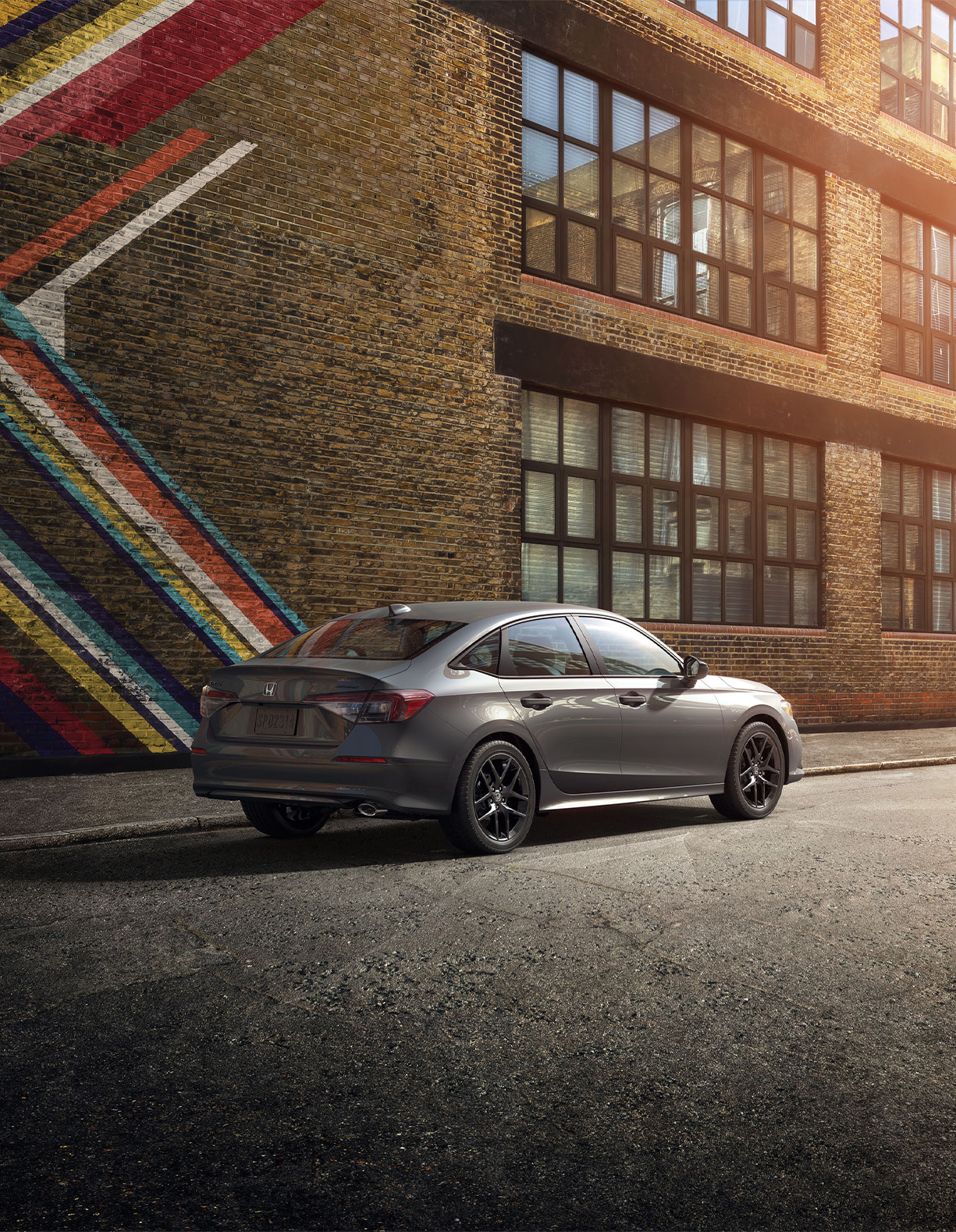
Every 2026 Civic Sedan comes standard with Honda Sensing®, on all four trims, with no packages required. The suite includes:
Ten airbags are standard on every trim, along with an ACE body structure, a rearview camera with dynamic guidelines and Vehicle Stability Assist. Blind Spot Information with Rear Cross Traffic Monitor is standard on Sport, Sport Hybrid and Sport Touring Hybrid, and the Sport Touring Hybrid adds Low-Speed Braking Control plus front and rear parking sensors.
The Corolla counters with Toyota Safety Sense 3.0 standard on every grade, including Pre-Collision System with Pedestrian Detection, Full-Speed Range Dynamic Radar Cruise Control, Lane Departure Alert with Steering Assist, Lane Tracing Assist, Road Sign Assist, Proactive Driving Assist and Automatic High Beams. New for 2026, Blind Spot Monitor with Rear Cross-Traffic Alert is standard across the lineup, which is a meaningful upgrade.
The Mazda3 makes i-Activsense standard on every trim, including Smart Brake Support, radar cruise control with Stop and Go, lane departure warning, lane-keep assist, blind spot monitoring with rear cross-traffic alert and driver attention alert. That is a strong standard showing, and the 2.5 Turbo Premium Plus adds a 360-degree View Monitor with parking sensors and traffic sign recognition. The Elantra includes Hyundai SmartSense standard, with Forward Collision-Avoidance Assist with Pedestrian Detection, Blind-Spot Collision Warning, Lane Keeping Assist, Lane Following Assist, Driver Attention Warning, Safe Exit Warning and Rear Cross-Traffic Collision-Avoidance Assist. Smart Cruise Control with Stop and Go, however, does not arrive until the SEL Sport Premium, and Highway Driving Assist is exclusive to the Limited.
All four take active safety seriously, and all four make a driver assistance suite standard. The Civic’s advantage is content: ten standard airbags, Honda Sensing on every trim including Traffic Jam Assist, and adaptive cruise with low-speed follow on the base car rather than as a step-up feature.
The 2026 Honda Civic is the clear winner in this comparison. Its hybrid powertrain produces 200 total system horsepower while returning 49 mpg combined, a pairing neither the 138-horsepower Corolla Hybrid nor the 139-horsepower Elantra Hybrid can approach and one the Mazda3 cannot answer at all. It has the largest trunk of the four at 14.8 cubic feet, with no cargo penalty for going hybrid. Honda Sensing and ten airbags are standard on every trim, and the Sport Touring Hybrid is the most thoroughly equipped car in this group. The Civic Hybrid was also named 2025 North American Car of the Year, making Civic the most honored model in that award’s history.
The competition is not weak, and it should be said plainly. The Corolla Hybrid edges the Civic on combined fuel economy and offers all-wheel drive, which the Civic does not. The Elantra Hybrid Blue is the mileage leader at 54 mpg combined, has the most rear legroom and is backed by a 10-year, 100,000-mile powertrain warranty. The Mazda3 has the most premium interior in the class, the sharpest handling, a 250-horsepower turbo option and standard all-wheel drive on two of its trims. Each is a defensible choice for a specific buyer.
For everyone else, meaning the shopper who wants strong performance, hybrid-grade efficiency, the most usable trunk and standard safety technology in one compact sedan without choosing between them, the 2026 Honda Civic is the answer. Visit Delaney Honda in Indiana, PA to explore the 2026 Civic lineup and schedule your test drive.